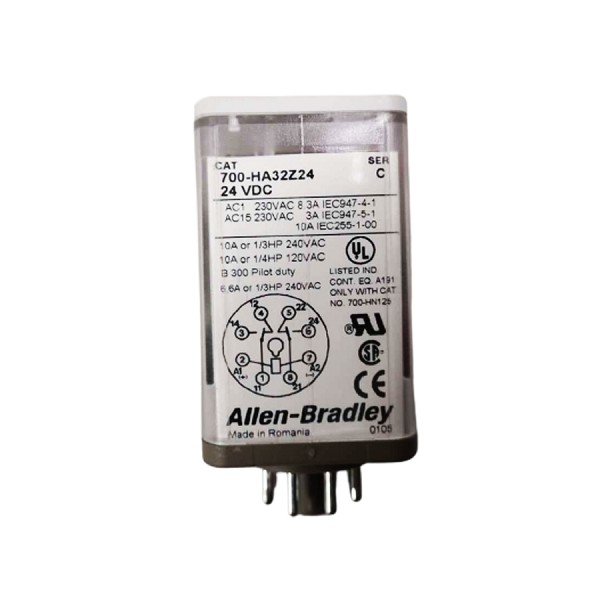
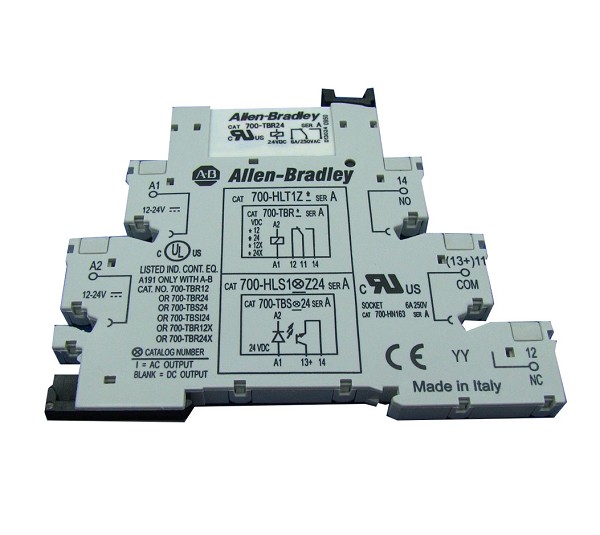
Allen-Bradley Relays are industrial switching and control components designed to help control electrical circuits and interface different parts of an automation system. Relays operate by using an electrical control signal to switch contacts, allowing a relatively low-power control circuit to operate or isolate another electrical circuit. They are widely used in industrial automation, control panels, machinery, motor-control systems, and electrical equipment where dependable switching and circuit management are required.
Relays can be used for functions such as switching loads, signal isolation, control sequencing, interlocking, status indication, and interfacing between control devices and electrical equipment. They can work with PLCs, sensors, switches, contactors, motors, solenoid valves, actuators, and other industrial components. Depending on the relay design, applications may involve electromechanical switching or solid-state switching technologies.
Allen-Bradley Relays can be used in manufacturing plants, production lines, packaging machinery, material handling systems, process-control equipment, machine tools, and electrical control cabinets. In an automation system, a relay can receive a control signal from a PLC or other controller and use its contacts to switch a connected electrical load. This provides flexibility when the control signal and load circuit require different electrical characteristics.
Reliable relay operation can help support consistent machine control and protect sensitive control outputs from unsuitable load conditions when correctly selected and applied. Relays can also be useful for creating electrical interlocks and control sequences that coordinate different machine functions.
Selection of a suitable relay should consider coil or input voltage, contact configuration, switching voltage and current, load type, switching frequency, mounting method, environmental conditions, and compatibility with the control system. Correct installation and wiring are important for reliable and safe operation.
Allen-Bradley Relays are suitable for new control-panel installations, machine building, automation projects, maintenance, replacement applications, and system upgrades. They can be used as individual control components or as part of larger industrial automation architectures.
Allen-Bradley Relay solutions are therefore a practical choice for industrial users seeking dependable electrical switching and control components. By supporting circuit switching, signal interfacing, isolation, sequencing, and equipment control, relays can contribute to improved automation performance, reliable machine operation, flexible control-system design, reduced downtime, and long-term reliability across demanding industrial applications.